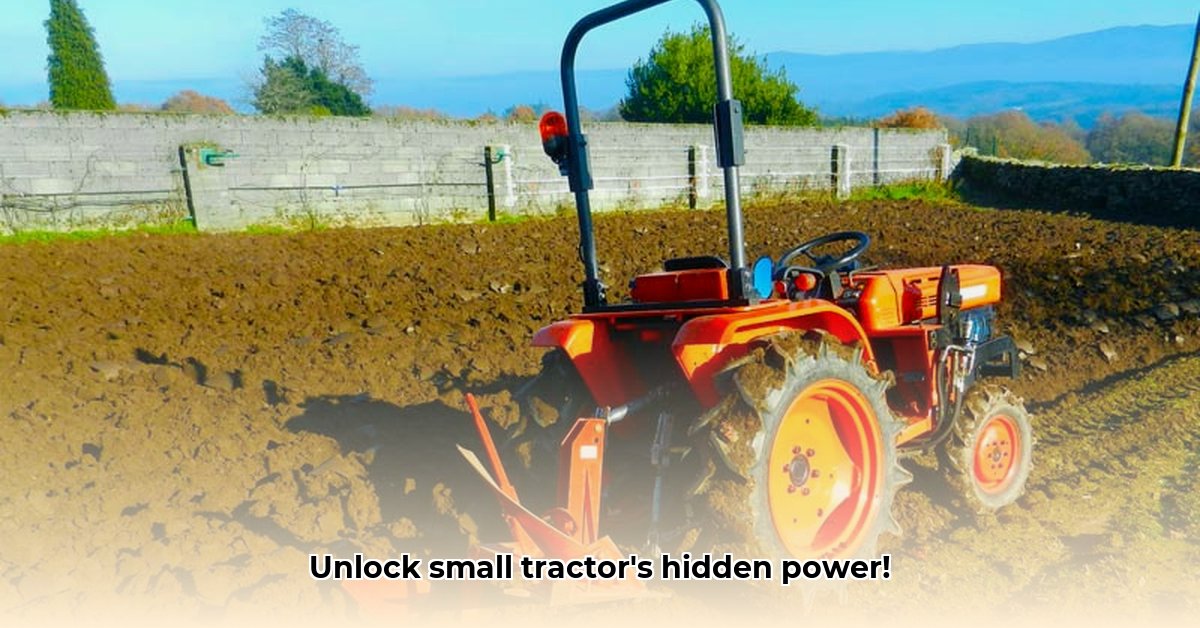
Choosing the Right Attachments: A Guide for Sustainable Small-Scale Farming
Selecting the right implements for your compact tractor is crucial for efficient and sustainable farming. This section helps you navigate the options, matching tools to your specific needs and soil conditions. Remember, choosing wisely leads to greater productivity and minimizes environmental impact. Do you need to till, mow, or haul? The answers dictate your implement needs.
For more information on small tractor implements, check out this helpful resource: Implement Guide.
| Category | Implement Examples | Best Suited For | Considerations |
|---|---|---|---|
| Tillage | Rotary tillers, cultivators | Preparing soil for planting, creating seedbeds | Soil type (clay, sandy, loam), desired soil texture |
| Mowing | Bush hogs, rotary mowers, flail mowers | Cutting grass and weeds in pastures, hay production | Terrain (hilly, flat), desired cutting height |
| Material Handling | Front-end loaders, pallet forks, buckets | Moving materials, feed, manure, snow removal | Lifting capacity (weight limits), maneuverability |
| Other | Box blades, post hole diggers, tillers, harrows | Land leveling, fence building, trenching, seedbed prep | Specific task requirements, soil conditions |
A rotary tiller, for example, is ideal for creating a fine seedbed, while a bush hog excels at clearing overgrown pastures. A front-end loader dramatically simplifies material handling, saving time and labor. The right choice depends on your specific needs and soil type. Don't forget to consider the size of your operation; a smaller farm might benefit from more compact attachments.
Mastering Your Implements: Operation, Maintenance, and Safety
Safe and efficient operation is paramount. Always consult your tractor and implement manuals before starting any task. Proper maintenance prevents costly repairs and ensures your equipment lasts. Have you ever considered the long-term cost savings associated with regular maintenance?
1. Safe Attachment: Carefully attach implements, following manufacturer instructions. Secure all connections before starting the tractor. Never work under raised implements.
2. Operational Proficiency: Start slowly, getting accustomed to the controls. Gradually increase speed as your confidence and proficiency grow.
3. Regular Maintenance: Clean implements after each use. Lubricate moving parts regularly. Inspect for wear and tear, replacing parts as needed.
Safety Precautions: Always wear appropriate safety gear, including eye protection, hearing protection, and sturdy work boots. Never operate equipment when fatigued.
Sustainable Farming Practices with Compact Tractor Attachments
Using compact tractor implements often promotes sustainability. While precise data might be limited, the general environmental advantages are significant. Did you know that smaller tractors typically use less fuel than larger models?
Fuel Efficiency: Smaller tractors consume less fuel, reducing your carbon footprint and operating costs. This translates to considerable long-term savings.
Reduced Soil Compaction: The lighter weight minimizes soil compaction, improving water infiltration and root growth. This supports healthier soil biology, crucial for long-term productivity.
Precision Application: Many attachments facilitate precise application of fertilizers and seeds, reducing waste and environmental impact.
Although quantifying these benefits requires further research, the evidence strongly suggests positive environmental impacts from using these smaller, more efficient attachments.
The Economics of Small Tractor Implements: A Long-Term Investment
The initial investment in implements can seem substantial. However, the long-term benefits often surpass the upfront costs. What are the key factors in determining the economic viability of this equipment?
Pros:
Lower Labor Costs: Reduced manual labor significantly cuts expenses. This frees up time for other essential tasks.
Increased Efficiency: Faster task completion maximizes productivity and output.
Improved Yields (Potential): Better soil health translates to potentially higher yields over time.
Cons:
Initial Investment Costs: The purchase price of implements can be a significant initial investment.
Maintenance Expenses: Regular maintenance and occasional repairs add to the overall cost.
Carefully assess both pros and cons before making a decision. Explore government subsidies and shared equipment programs to make the initial investment more manageable.
Finding Resources and Support: Your Path to Success
Many resources are available to support your journey. Remember, you don't have to go it alone!
Manufacturer Websites: Manufacturer websites are rich with information, including manuals, troubleshooting guides, and specifications.
Local Agricultural Extension Offices: Local experts offer advice, training, and connections to local resources.
Online Farming Communities: Connect with other farmers online to share experiences, learn from others, and ask questions.
By utilizing these resources, you'll not only enhance your farming efficiency but also contribute to sustainable agricultural practices, building a resilient and profitable farm operation for years to come.